MoviesMovie Review
Vijay Deverakonda's Ranabaali Review: Ambitious Period Drama Falters in Execution
Rahul Sankrityan and Vijay Deverakonda team up for a famine-era action saga—does it deliver?
Dumtika EditorialOctober 16, 2026 · 6 min read
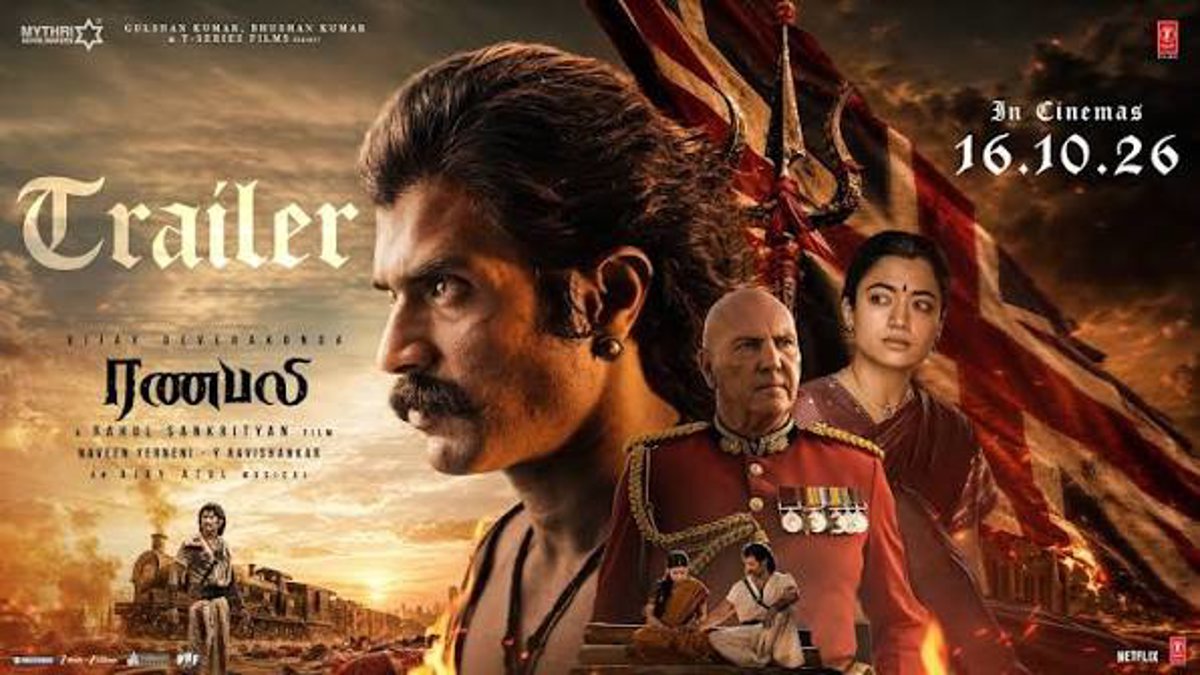
(Image: Dumtika Editorial)
Key Highlights
- Vijay Deverakonda and Rashmika Mandanna deliver strong performances
- Unique famine-era story, but screenplay becomes predictable
- Lavish production and cinematography stand out
- Weak background score and editing hamper overall impact
After the critical and commercial success of 'Shyam Singha Roy', director Rahul Sankrityan returns with 'Ranabaali', aiming to recreate his magic with a period action drama. His previous outing set high expectations for his ability to blend history with emotion. Vijay Deverakonda, coming off a string of mixed results at the box office, including the underwhelming performance of his last film, seeks to reclaim his form with this ambitious project. With Rashmika Mandanna as the female lead and a strong supporting cast, 'Ranabaali' arrives with significant anticipation.
Did Rahul Sankrityan manage to deliver another impactful period film? Has Vijay Deverakonda found the right script to showcase his range? Do Ajay-Atul's compositions elevate the film's emotional beats? Does the film offer a fresh take on the British-era struggle, or does it tread familiar ground? Let's figure it out with a detailed analysis.
What is it about?
Set in the 1860s, 'Ranabaali' unfolds against the backdrop of a devastating famine in the Madras Presidency, orchestrated by the British who siphon off food grains to their homeland, leaving countless Indians to perish. At the heart of this tragedy is Singanamala Bobbili Ranabaali (Vijay Deverakonda), a legendary figure from Rayalaseema who rises in revolt against the British generals. His journey is intertwined with Jayamma (Rashmika Mandanna), whose innocence and compassion attempt to soften his hardened resolve. The film chronicles Ranabaali's rebellion, his personal struggles, and the climactic confrontation with the colonial powers, exploring whether his fight can alter the fate of his people.
Performances
Vijay Deverakonda (Singanamala Bobbili Ranabaali): Vijay delivers a committed performance as the rebel leader. He brings intensity to the action sequences and convincingly portrays the transformation of a man driven by loss and anger. However, the script's limitations prevent him from fully exploring the emotional depths of his character, especially in the latter half.
Rashmika Mandanna (Jayamma): Rashmika shines in the role of Jayamma, infusing the film with warmth and sincerity. Her chemistry with Vijay is a highlight, and her portrayal of a woman striving to change her husband's outlook adds emotional weight to the narrative. She continues her streak of strong performances.
Arnold Vosloo (British General): Arnold Vosloo, cast as the principal British antagonist, brings a menacing presence but is hampered by the awkwardness of Telugu dialogues, which undercuts the authenticity of his character. His role, while pivotal, suffers from one-dimensional writing.
Supporting Cast: The supporting ensemble delivers adequately, but none stand out due to limited screen time and underdeveloped arcs.
Technicalities
Music/Songs: Ajay-Atul's soundtrack features well-composed songs that fit the period setting and enhance the romantic moments. However, their background score fails to generate the necessary tension or emotional highs, leaving several key scenes feeling flat.
Background Score: The BGM is one of the film's weakest aspects. Intended to heighten drama and action, it instead dilutes the impact of crucial sequences, especially in the second half.
Cinematography: Jishnu Bhattacharjee and Nirav Shah deliver visually striking frames, capturing the scale and authenticity of the era. The production design, supported by Mythri Movie Makers' lavish investment, is immersive and detailed.
Editing: Karthika Srinivas R's editing is a letdown. The film's pacing suffers from an unnecessarily long runtime, and repetitive action sequences could have been trimmed to maintain engagement. Some sound-mixing issues further detract from the viewing experience.
Positives
- Unique focus on the famine era, a rarely explored chapter in Telugu cinema
- Strong performances by Vijay Deverakonda and Rashmika Mandanna
- Authentic production design and impressive cinematography
- Engaging romantic track in the first half
Negatives
- Predictable and repetitive screenplay, especially in the second half
- Weak background score undermines emotional impact
- Overlong runtime with unnecessary scenes
- British characters speaking Telugu feels forced and unnatural
- Editing and sound-mixing issues affect immersion
Analysis
Rahul Sankrityan's decision to spotlight the famine caused by British exploitation is commendable, marking a departure from the usual freedom-fighter narratives. The first half, particularly the Jayamma chapter, is engaging, blending romance and emotion with the historical setting. The chemistry between Vijay and Rashmika provides much-needed relief in an otherwise somber story.
However, the film falters as it moves into the second half. The screenplay, which initially promises depth, becomes formulaic and predictable, echoing tropes seen in other British-era dramas like 'Sye Raa Narasimha Reddy' and 'Khaidi No. 150'. The unique famine angle is sidelined in favor of routine action set pieces, many of which feel repetitive and drawn out. The emotional highs that should define a film of this scale are blunted by a lackluster background score and uninspired editing.
Sankrityan's earlier work, 'Shyam Singha Roy', succeeded in marrying period detail with a compelling narrative arc. In contrast, 'Ranabaali' struggles to maintain momentum after a promising start, with the director's intent not fully realized in execution. The British antagonists, despite being central to the conflict, are let down by stilted dialogue delivery and underwritten roles.
While the film's technical aspects—especially cinematography and production design—are top-notch, they cannot compensate for the narrative shortcomings. The editing team could have tightened the runtime significantly, as several sequences add little to character or plot progression. Overall, 'Ranabaali' is a sincere attempt at telling an important story but falls short of delivering the emotional and dramatic punch it aims for.
Final Verdict
Ambitious Period Drama With Sincere Effort, But Falls Short Rating – 2.75/5
Pros
+ Unique famine-era historical focus
+ Vijay Deverakonda and Rashmika Mandanna's performances
+ Impressive cinematography and production values
+ Engaging romantic track in first half
Cons
− Predictable and repetitive screenplay in second half
− Weak background score reduces emotional impact
− Excessive runtime and poor editing
− British characters speaking Telugu feels unnatural
− Sound-mixing issues in key scenes
Trending
1
Celebrity
Garividi Lakshmi: The Woman Who Revolutionized Burrakatha in Uttarandhra
2
Movies
Sandeep Reddy Vanga Urges Audiences to Watch Vijay Deverakonda's Ranabaali
3
Box Office
Rajinikanth’s Jailer 2 Earns ₹6.55 Cr in Nizam After Two Days
4
Movies
Keerthy Suresh Shines in January 12 Vidudala First Look Poster
5
Box Office