Asha Bhosle: The Voice That Knew No Borders Passes Away. Nation Mourns
Asha Bhosle, the iconic playback singer with a career spanning over 80 years, passed away at 92. Her timeless songs and legacy continue to inspire millions.
Dumtika Editorial
April 12, 2026 · 2 min read
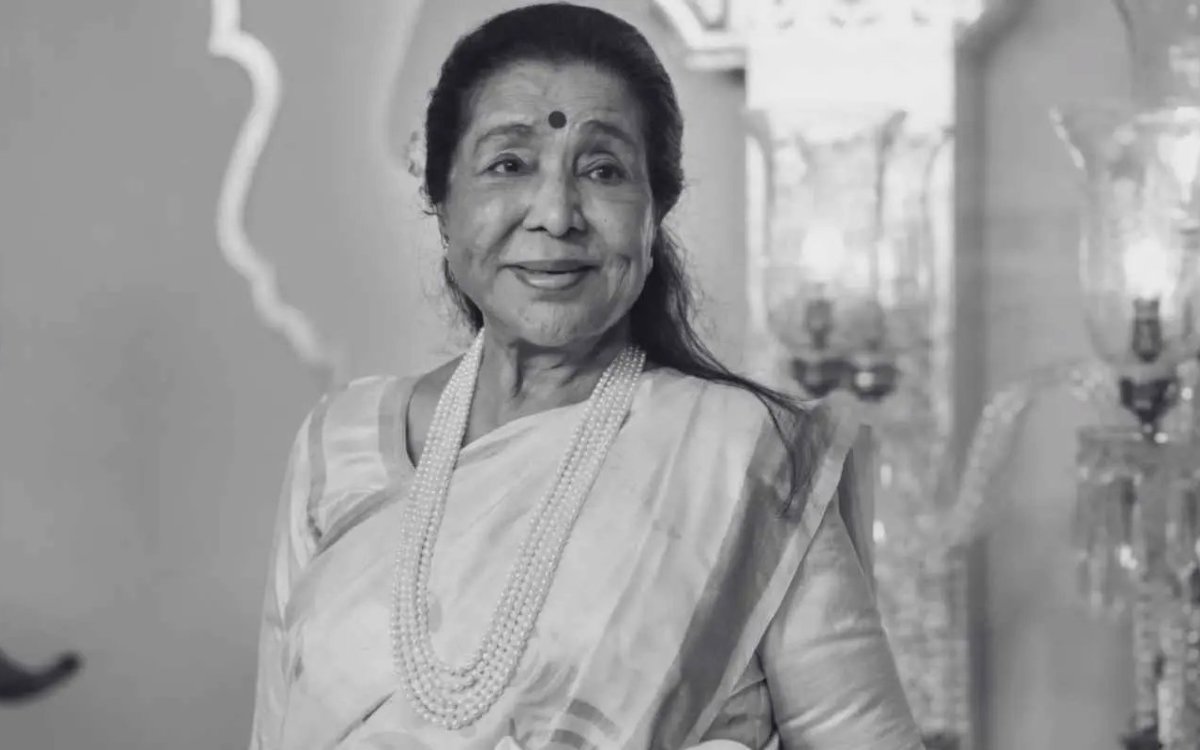
(Image: Dumtika Editorial)
The rain hadn't come to Mumbai that Sunday morning, but the sky hung low and grey, as though it knew. At Breach Candy Hospital, the monitors beeped slower and slower until, sometime on April 12, 2026, they stopped altogether. Asha Bhosle, the voice that had sung twelve thousand songs in twenty languages, the voice that had turned longing into melody for seven decades fell silent at ninety-two.
Her son Anand stepped outside the hospital and spoke five simple words to the waiting cameras: "She passed away today." Across the country, phones lit up. In Hyderabad, an autorickshaw driver turned up his radio in Tank Bund traffic. The station was playing "Naalo Oohalaku" from Geetanjali that ethereal hum she had gifted to Telugu cinema, a song that still gave goosebumps to anyone who had ever loved and lost. He pulled over. He couldn't drive.
Asha Bhosle's Telugu journey had begun in 1968 with Paalu Neellu, where she sang "Idhi Mouna Geetham" a silent song about unspoken feelings. Though she recorded far fewer Telugu songs than Hindi ones, every single one became timeless. From the playful energy of "Bamchik Bamchik Bam" in Ardhangini to the soul-stirring devotion of her Annamayya keerthanalu, she proved that emotion has no mother tongue.
Veteran Telugu producer C. Kalyan, fighting back tears, told reporters she was "a woman with a golden heart." He explained that logistics the need to travel to Mumbai for recordings had kept Tollywood from using her voice more often. "Still," he said, "her talent is unmatched." Another producer noted that Telugu cinema's own wealth of legends P. Susheela, S. Janaki, Vani Jairam meant Asha sang selectively in the south, but when she did, she left a mark that decades could not erase. That evening, in a small flat in Vijayawada, a grandmother played an old cassette of "Vennela" from Iddaru for her granddaughter. The girl had never heard Asha Bhosle's name before. But within moments, her eyes were wide, then wet. "Who is she, Ammamma?"
"She was everyone's voice, bangaru. The voice for every feeling you'll ever have."
Outside, the rain finally came. "She was everyone's voice, bangaru. The voice for every feeling you'll ever have." Outside, the rain finally came.