OTTMovie Review
Modha Rathri OTT Review: Rishikanth Shines in a Rural Comedy with Flaws
Raja Karuppasamy's rural comedy Modha Rathri lands on Netflix with Telugu audio, offering laughs but uneven pacing.
Dumtika EditorialSeptember 22, 2026 · 5 min read
(Image: Dumtika Editorial)
Key Highlights
- Rishikanth and Anishma Anilkumar deliver strong, nuanced performances
- Situational humor and subtle social themes stand out in the first half
- Second half suffers from slow pacing and predictable climax
- Technical flaws include Tamil songs in Telugu version and underused comedians
After making a mark with his previous work behind the camera, Raja Karuppasamy takes the director’s seat for Modha Rathri, a rural comedy-drama that debuted on Netflix on September 18, 2026. While this is Karuppasamy’s first major directorial outing, lead actor Rishikanth has been steadily building his reputation, with his last notable performance in a supporting role drawing praise for its subtlety. Expectations were moderate, especially with the film’s simultaneous theatrical and OTT release, and the presence of Anishma Anilkumar, who previously entertained audiences in Youth.
Did Raja Karuppasamy manage to deliver a fresh take on rural comedy? Was Rishikanth able to anchor the film with his understated style? Did Anishma Anilkumar break away from her earlier image? Did the technical crew elevate the film’s modest premise? Let’s figure it out with a detailed analysis.
What is it about?
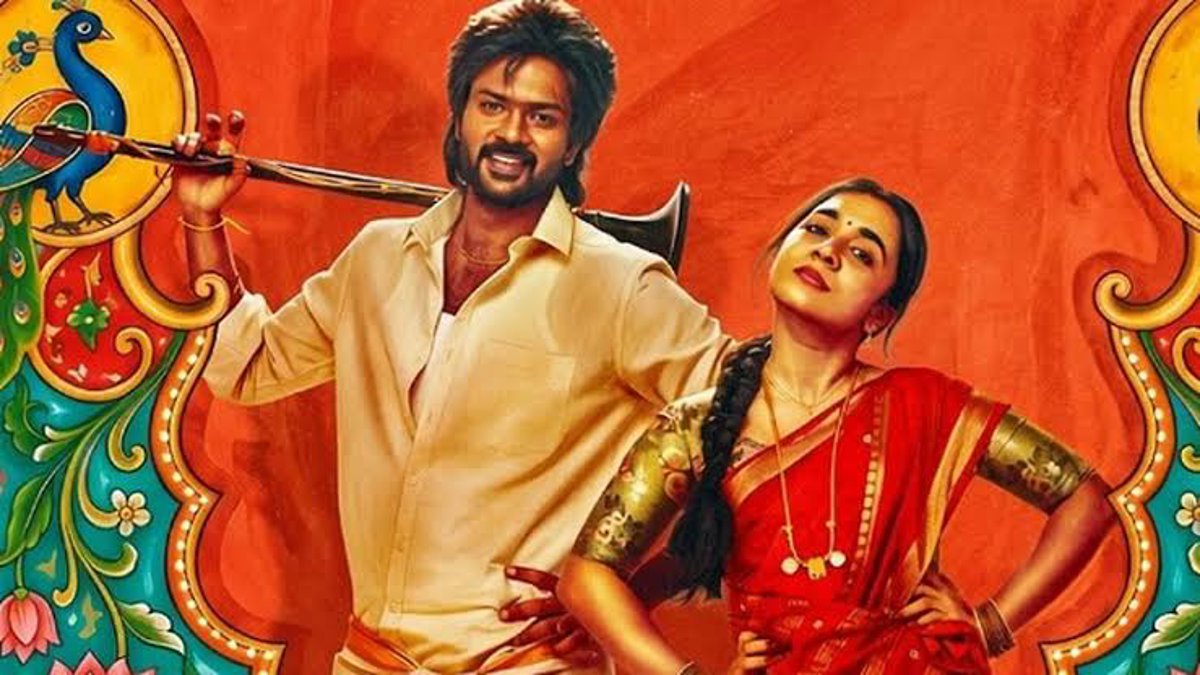
Modha Rathri follows Maruthi (Rishikanth), a young man whose parents arrange his marriage to Bujji Lakshmi (Anishma Anilkumar) without consulting either of them. Maruthi carries a tragic past, while Lakshmi is in love with someone else. Despite their reluctance, the marriage goes ahead, setting the stage for a night of chaos. On their wedding night, Maruthi discovers Lakshmi attempting to elope. The rest of the film revolves around whether Maruthi helps her escape, opposes her decision, and how their families react if the truth comes out. The story unfolds over a single night, blending situational comedy with subtle social commentary on patriarchal norms and parental dominance, all set in a rural backdrop.
Performances
Rishikanth (Maruthi) delivers a restrained, natural performance that captures the silent grief of his character’s past and the confusion he feels on his wedding night. He avoids melodrama, instead opting for a nuanced portrayal that grounds the film’s emotional core. His reactions to the unfolding chaos are both believable and relatable.
Anishma Anilkumar (Bujji Lakshmi) impresses with a performance that marks a clear departure from her earlier, more comedic roles. She brings genuine humor in the initial scenes, but as the narrative shifts, she conveys vulnerability and helplessness with subtlety. Her transition from light-hearted banter to silent suffering is handled deftly.
Director Raja Karuppasamy himself appears as Nitish, providing comic relief through a series of awkward misadventures. His slapstick timing works well, injecting much-needed energy into the proceedings. Bagavathi Perumal and Abdool Lee, though relegated to supporting roles, manage to elicit a few laughs, but their limited screen time leaves one wishing for more.
Technicalities
Music/Songs: Bharath Sankar’s background score complements the quirky tone of the film, enhancing both comedic and tense moments. However, the decision to leave the songs in Tamil for the Telugu OTT version is a glaring oversight, disrupting the viewing experience for Telugu audiences.
Cinematography: Surendran Paranjothi’s camera work is functional, capturing the rural setting effectively but without any standout visual flair. The framing and lighting serve the story but do not elevate it.
Editing: Ashok Arjunan keeps the first half brisk and engaging, but the second half suffers from sluggish pacing. Several scenes feel unnecessarily stretched, and tighter editing could have improved the overall flow, especially in the latter portions.
Positives
- Rishikanth’s understated, natural performance as Maruthi
- Anishma Anilkumar’s versatile portrayal of Lakshmi
- Organic situational humor, especially in the first half
- Subtle integration of social themes without being preachy
- Effective comic relief from Raja Karuppasamy’s Nitish
Negatives
- Second half drags with overextended sequences
- Predictable climax lacking emotional payoff
- Songs left in Tamil in Telugu version
- Underutilization of seasoned comedians in supporting roles
- Functional but uninspired cinematography
Analysis
Raja Karuppasamy’s debut as a director shows promise in handling situational comedy and capturing the quirks of rural life. The screenplay’s first half is lively, with brisk chaos and organic humor that never feels forced. The film’s social commentary on patriarchal norms and caste-based attitudes is woven in subtly, avoiding heavy-handedness. However, the premise—an incident unfolding over a single night—proves difficult to sustain for a feature-length runtime. The second half loses momentum, with scenes that drag and a resolution that feels both predictable and underwhelming.
Compared to other rural comedies in Telugu and Tamil cinema, Modha Rathri lacks the sharpness and narrative depth seen in films like "Pellichoopulu" or "Middle Class Melodies." While those films managed to balance humor, emotion, and social critique, Modha Rathri settles for surface-level engagement. The writing, though competent in patches, misses opportunities for deeper character exploration and more inventive comedic set pieces.
The technical aspects, particularly the editing and post-production, leave much to be desired. The choice to retain Tamil songs in the Telugu version reflects a lack of attention to detail that undermines the OTT experience. Additionally, the supporting cast, especially seasoned comedians, are not given enough space to shine, which could have injected more energy into the lagging portions.
Despite these shortcomings, the film is anchored by strong performances from Rishikanth and Anishma Anilkumar, and the humor in the first half is genuinely effective. For viewers seeking a light rural comedy with some social undertones, Modha Rathri offers a few enjoyable moments, but it ultimately falls short of its potential.
Final Verdict
Routine Rural Comedy with Few Bright Spots Rating – 2.75/5
Pros
+ Rishikanth’s understated, natural performance
+ Anishma Anilkumar’s versatile portrayal
+ Organic situational humor in first half
+ Subtle social themes without preachiness
+ Effective comic relief from Nitish
Cons
− Second half drags noticeably
− Predictable climax with weak payoff
− Songs left in Tamil for Telugu version
− Underused seasoned comedians
− Cinematography lacks visual flair
Trending
1
Celebrity
Garividi Lakshmi: The Woman Who Revolutionized Burrakatha in Uttarandhra
2
Movies
Sandeep Reddy Vanga Urges Audiences to Watch Vijay Deverakonda's Ranabaali
3
Box Office
Rajinikanth’s Jailer 2 Earns ₹6.55 Cr in Nizam After Two Days
4
Movies
Keerthy Suresh Shines in January 12 Vidudala First Look Poster
5
Box Office